
Vela Bay Singapore has been a part of a trend of increased residential real estate. In the global context of cities and urban development, it overlaps with the overall economic planning process. The development is a private condominium in Bayshore, Singapore.
The conversion of Bayshore into a new residential center is an example of how specific urban planning can affect the housing demand and capital movements. It also reflects household investment behavior. This brings the private condos in the neighborhood not only as a form of lifestyle, but as an economic investment within a highly planned city system.
Planning and Economic Performance in Urban Areas
The Singaporean model of economy highly emphasizes efficiency, long-term planning, and optimum land use. This approach is advantageous to residential developments of emerging precincts such as Bayshore. Transport connectivity, environmental preservation and the public infrastructure projects collaborate to improve both the quality of life and the asset value. Economically speaking, these kinds of developments show that controlled supply with a constant demand can stabilize prices even through global uncertainty.
Store of Value of Real Estate
Singapore residential property was never considered to be a speculative asset but a store of value. The development of Vela Bay upholds this perception since it is located in some of the zones that are facilitated by long-term planning and development. The access of the labor force and availability of the employment centers to the major transport networks also indirectly benefits housing demand.
This economic concept indicates that investments pegged on productivity and accessibility have a long-term value. Not only is it that property purchasers are buying living space. But, they are also buying access to economic areas with good employment and service connections.
Drivers of Demand in the Radically Evolving Economy
The distance-working trends, the population aging process, and the transition of households to new forms of structure are the economic changes that affect residential preferences. The demand for balance between work accessibility and lifestyle comfort is increasing as well. And, the private condominiums in well-connected but peaceful areas satisfy the demand.
The shift is supported by the urban connectedness and seaside location of Bayshore. The attributes are appealing to the residents who appreciate economic activities and their own welfare. In the macroeconomic perspective, this kind of demand is a sign of a maturing housing market with quality, sustainability, and long-term utility. That makes it significant rather than speculative gains.
The Policy and Market Stability
Regulatory consistency is one of the characteristics of the Singapore property market. Cooling policies, clear ownership regulations and sensible financing policies will bring about stability in the long term. In the case of private condominiums, this will lessen the chances of excessive price volatility. It will also affect affordability if it is not excessively high to meet policy goals.
Economic Resilience and Sustainability
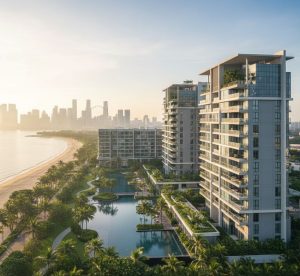
Environmental sustainability is becoming more and more related to economic performance. Developments around green areas and along the coast, in residential properties, are no longer regarded as luxury. But, it will also be a factor in long-term urban strength. The quality of the environment influences social cohesion, productivity and the public health, which have an economic equivalent.
Bayshore private condominiums enjoy closeness to natural facilities and at the same time belong to the urban systems. This combination helps to sustain living habits and strengthen the attractiveness of the region in a future oriented economy.
Broader Economic Perspective
A Bayshore condominium is not only the ownership of an individual when we look at it in economic terms. It forms part of a bigger story in terms of infrastructure investment, demographic trends, policy frameworks, and capital allocation. The example of Vela Bay development shows how residential properties may mirror the wellbeing and future of a national economy.
YOU MAY ALSO READ: The Current State of Cryptocurrency Markets: Trends and Analysis
Conclusion
Vela Bay Singapore is an example of how the integrated developments of residential houses can be presented in the context of the bigger economy. The private condominium market in Bayshore emphasizes the significance of housing as an individual form of capital and an economic metric. It comes with roots in consideration of metropolitan planning and backed by a consistent government. With the cities evolving to meet global and demographic changes, such developments will always be part of sustainable economic growth.